Beyond the Splash Zone: Bathroom Paint That Earns Its Keep
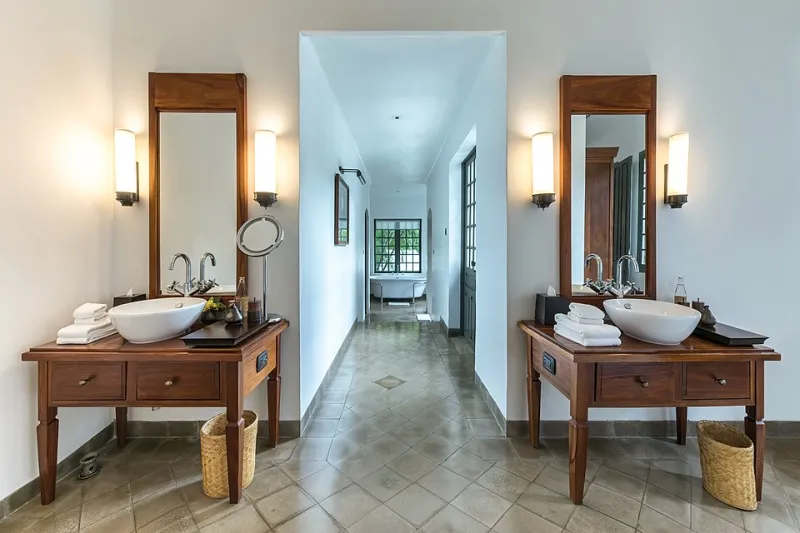
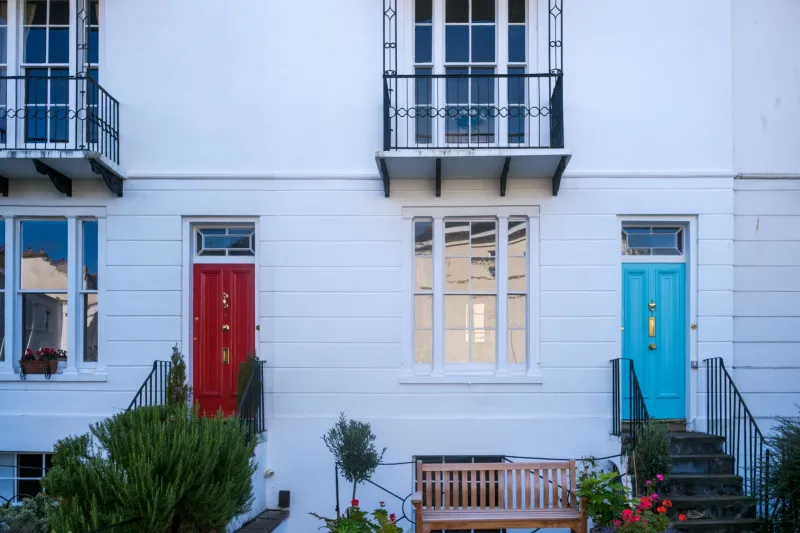
Photo: Basile Morin, CC BY-SA 4.0, via Wikimedia Commons
There's a particular smell to a bathroom that's been painted with the wrong stuff. Slightly damp, faintly chalky, a bit like a school corridor after a wet break. You'll notice it about eighteen months in, usually when you're leaning over the bath to clean the tiles and a patch of emulsion comes away on your sleeve.
Bathrooms are the hardest-working room in the house for paint. They get hot, they get cold, they get soaked, and then they get scrubbed. A standard vinyl matt that behaves beautifully in a hallway will quietly give up in a room where the extractor fan is fighting a losing battle. So it's worth a proper think — not just about colour, but about what's actually on the wall.
The Two Enemies Are Steam and Scrubbing
Most bathroom paint failures aren't dramatic. There's no peeling sheet of paint landing in the bath. What happens is subtler: the surface goes dull, then slightly tacky, then it starts collecting a grey film that won't wipe off. That's moisture getting behind a finish that was never designed to keep it out.
The second enemy is you, with a cloth. Bathrooms need cleaning more aggressively than any other room — limescale, soap scum, the occasional splash of toothpaste — and a soft matt finish simply doesn't have the backbone for repeated wiping. It burnishes. It goes shiny in the places you scrub and stays flat everywhere else, which looks exactly as odd as it sounds.
So the two questions are always: how wet does this room get, and how hard do you clean it?
Windowless Ensuites Are a Different Job
A shower room with no window and a fan that only runs while the light is on is effectively a wet room that happens to have a door. In those spaces I'd push almost everything towards a mid-sheen or eggshell finish, including the ceiling.
Ceilings get forgotten, and they're where steam condenses first. A bathroom-grade mid-sheen on the ceiling — in a soft off-white rather than brilliant white, which shows every mark — will wipe down and won't hold onto moisture the way matt does. Going full gloss up there is a step too far; it looks like a 1980s leisure centre and it shows every ripple in the plaster.
If the room is genuinely tight, consider painting the walls in the same mid-sheen as the tiles rather than fighting them. Matching the paint to a warm neutral tile makes a small windowless space read as one calm surface instead of a patchwork.
Family Bathrooms: Plan for the Splash Zone
In a busy family bathroom, the lower half of the wall around the bath is on borrowed time regardless of what you put on it. Splashes, wet towels, the occasional toy flung with enthusiasm — that zone takes a beating.
One practical approach is to accept the division. Tile or panelling up to about a metre with a bathroom-grade eggshell above gives you wipeable where you need it and colour where you want it. If you'd rather keep it all painted, use a durable mid-sheen throughout and keep the colour choice a shade deeper than you'd pick in a drier room — mid-tones hide the faint tidemarks that pale colours advertise.
Finish matters more than colour here. Spend the money on the paint rather than the tin's label; a cheap 'bathroom' paint is often just a standard emulsion with a proud name.
Colour in Small or Heavily Tiled Rooms
Bathrooms in British homes tend to fall into two camps: tiny and tiled, or generous and tiled. Either way, there's usually less wall than you'd expect, which changes how colour works.
- If the tiles are the story, let them lead. Find the quietest tone in the tile or grout and use it on the remaining walls. Suddenly the whole room looks deliberate rather than like two schemes meeting awkwardly.
- Pale doesn't always mean bigger. In a north-facing ensuite, a cool white can go grey and slightly grim. A soft warm neutral, or a pale sage, holds its own in low light without shouting.
- Deeper colours suit small rooms well — a mid-blue or a muted green makes a compact bathroom feel considered rather than squeezed. Just keep it in a wipeable finish.
- Don't forget the woodwork. Skirting, door and window reveals take the same moisture as the walls. Use the same durable system there rather than standard undercoat and gloss, especially near the shower.
Ventilation and Prep Do Half the Work
No paint survives a badly ventilated bathroom indefinitely. If the mirror's still fogged twenty minutes after a shower, the fan isn't doing its job, and the paint is absorbing the difference. Upgrading an extractor is usually cheaper than repainting every couple of years.
Prep matters just as much. In rooms that have been painted before, sugar soap the walls properly — bathroom surfaces carry a film of soap, conditioner and limescale that paint won't grip. Fill and sand any flaking patches, spot-prime bare plaster, and give new plaster a mist coat before anything else. Skipping the mist coat is the single most common reason a bathroom paint job fails early.
Where to Spend, Where to Save
Save on colour. Sample pots and tester patches cost little and stop expensive mistakes. Spend on the product that's actually doing the work: bathroom-grade eggshell or mid-sheen for walls and ceilings, a decent primer where the surface is dubious, and a proper extractor fan if the room needs one.
A bathroom repaint done with the right finish should give you a good seven to ten years before it needs revisiting. Done with leftover matt from the hallway, you'll be back up the ladder in two. Same colour on the tin — completely different result.