Paint Around the Sofa: Refreshing a Room While Life Carries On
You don’t have to decamp to a relative’s spare room or eat every meal off your knees for a fortnight just because one room needs a fresh coat. In a small British home, the idea of emptying a room completely is often the thing that stops the job starting at all. The sofa is too heavy, the wardrobe is built in, the cat has opinions and the kids still need somewhere to do their homework.
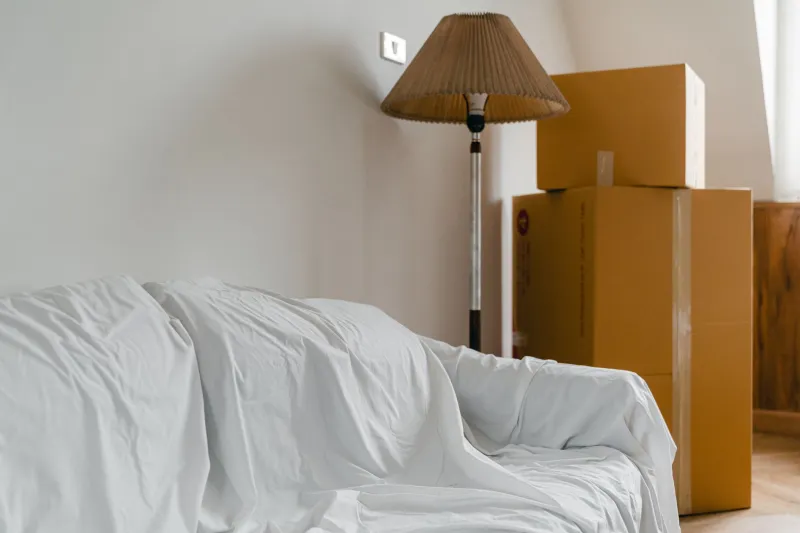
The good news is that repainting an occupied room is entirely normal work for a decorator. It just needs a different plan from the empty-room fantasy. Instead of one dramatic clear-out, you work in zones, protect what stays, and let the room keep functioning while the colour changes around it.
The empty-room fantasy
Most painting advice is written as if every room can be stripped back to four bare walls and a floor. Real homes rarely cooperate. There’s the box room that doubles as a study, the through-lounge where the dining table has nowhere else to go, or the terraced house where the only route to the kitchen is straight through the room being painted.
The practical answer is not to pretend otherwise. Decide which parts of the room can be out of action and for how long. Then build the painting schedule around that, rather than around an idealised version of the room that doesn’t exist.
Plan the walls, not just the colour
Before anything gets moved, agree the order of work. In an occupied room, sequencing matters as much as the shade on the tin. Ceilings first, then walls, then woodwork and trim is the usual rhythm because it lets you catch drips and dust before the final finish goes on.
If the room has to stay in use, consider painting one main wall at a time rather than trying to do all four in one go. That approach suits rooms where furniture can be clustered in the middle for a day or two, then shifted back while the next wall dries. It takes a little longer overall, but it keeps the room usable and reduces the chance of someone brushing past a wet skirting board with a laundry basket.
Furniture: zone it, don’t scatter it
Moving furniture badly is often worse than leaving it in place. Pushing chairs into corners and stacking cushions on the landing creates tripping hazards and makes every surface feel temporary. Instead, create one clear zone in the middle of the room for larger pieces and keep a walking route around the edges.
Furniture sliders are worth their weight in gold on carpet and hard floors. Remove small items first — books, plants, lamps, ornaments, the pile of post that lives on the sideboard — and put them in labelled boxes in another room. Take pictures down rather than trying to paint around them. If a wardrobe or bookcase can’t move, work carefully around it and accept that the wall behind it will not get the same treatment. Nobody will see it once the room is back together.
Floors, dust and the door gap
Dust is the quiet spoiler of an occupied paint job. It settles on furniture, gets walked through the house and finds its way into freshly painted corners. Cover floors with canvas dust sheets rather than thin plastic alone; canvas grips better, absorbs small drips and doesn’t turn into a slip hazard. Use masking tape to hold sheets tidy around skirting boards, but avoid leaving tape on painted surfaces for longer than you need to.
Seal the gap under the door with a folded sheet or tape if you’re sanding. Vacuum before you start sanding, not just afterwards. Wipe surfaces with a damp cloth rather than dry-dusting, which simply moves the dust around. Keep a window open where you can for ventilation, but don’t leave wet paint in a room with pets and small children wandering through.
Drying time is part of the timetable
Drying times are not a suggestion. Water-based emulsion is usually touch-dry within a couple of hours and ready for a second coat in around four, but that depends on temperature, humidity and how thickly it has been applied. Oil-based paints and some trim finishes take much longer. In a cool British autumn, a room that feels dry to the touch may still be soft enough to mark.
Build drying time into the day rather than trying to race it. If the room needs to be used in the evening, paint the wall that nobody leans on first. Keep furniture pulled slightly away from wet skirting boards. Don’t hang curtains or blinds until the paint is properly cured, and don’t put heavy items back against a wall while it is still soft.
Children, pets and the daily reset
Children and pets change the pace of an occupied paint job. A dog’s tail and a wet skirting board are not a good combination. Settle pets in another room before opening paint, and keep them out until surfaces are dry. Cats in particular seem to find wet paint irresistible, so close doors and put away loose dust sheets that could be walked over.
For children, work around nap times, school hours or a weekend at the grandparents’. Keep the painted room out of bounds where possible, and don’t rely on a casual ‘don’t touch’ warning. A daily reset helps: tools cleaned, sheets folded back, furniture returned just enough to make the room usable, and any wet areas clearly marked.
How a decorator sequences an occupied home
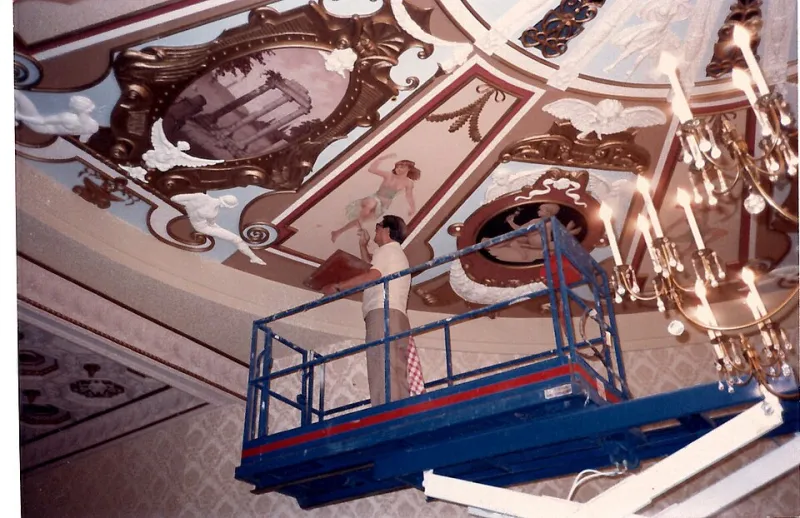
A professional decorator working in a lived-in home is not just painting faster. They are sequencing the work so daily life can continue. That usually means preparation first — filling, sanding and protecting — then ceilings and walls in a planned order, then trim, doors and touch-ups. Good decorators clear dust at the end of each day and keep the working area as contained as possible.
At RG Painters & Decorators, we often work room by room in occupied houses. The aim is to leave you with a usable space each evening, not a building site you have to climb over to reach the kettle. A clear plan for furniture, drying times and daily access makes far more difference than rushing the first coat.
A realistic rhythm for one room
A single room can often be refreshed over several days without emptying the house. Preparation and protection come first. Then ceilings and walls. Then woodwork and trim. Finish with touch-ups once the dust has settled and the furniture is back in place. If the room has to stay in use, stretch that rhythm across a week rather than compressing it into a weekend.
The result is not a show-home reveal that required a fortnight of chaos. It is a fresher room that kept working while it changed — which, in a busy British home, is usually the win that matters most.